Make yours
Tell us the size and this gets drawn to it.
This one is made to order rather than configured on screen: width across the wall moves from 120 to 240 mm. Send a photo of the plant and the spot it has to live in, with the code PP-WL-160, and a size and a drawing come back the same day. 7 to 10 days from there.
The numbers
- Size
- 160 mm wide, 108 mm off the wall, 152 mm tall
- Holds
- 0.48 litres of medium
- Reservoir
- 0.15 litres
- Made to your size
- width across the wall, 120 to 240 mm
- What stays as drawn
- Projection, keyhole spacing, false floor height and drain size stay as drawn. At 240 mm the wet mass approaches 3 kg and the fixing specification changes.
- Lead time
- 7 to 10 days
- Made of
- PETG, printed, four perimeters on the back plate and the keyhole webs; Silicone drain bung, bought in; EPDM wall gasket strip, bought in
- Colours
- unpigmented natural, warm white, pale sand, slate grey (warm white as standard)
- Water
- False slotted floor over a 0.15 l sump, with a plugged 10 mm drain at the front bottom edge. The sump is a catch, not a reservoir, and is meant to be emptied rather than relied on. The gasket strip keeps the back plate off the paint so a damp wall does not mark.
- Tray
- Tray is part of the pot
- Where it lives
- Indoors
- Weight
- 340 g empty
These are the figures the piece is drawn to rather than measurements taken off a finished one. Send the pot it has to replace and we will move them.
What it suits
Suits
- Trailing Epipremnum
- Ceropegia woodii
- Rhipsalis
- Small ferns in a shaded hallway
- Tradescantia
Not for
- Anything upright that will make the pot top-heavy on two screws
- Succulents, because the sealed sump is exactly wrong for them
- Plants over about 400 mm of top growth
112 mm of medium is a real root depth, but the fixing, not the plant, is the limit here.
Drawn for Pothos, and each of those pages says why this shape and not another.
Why it is that shape
A wall pot cannot drain onto the wall, which is why almost all of them are sealed boxes and why almost all of them kill plants slowly. Giving it a sump gets air back under the root ball and giving it a plug gives the salt somewhere to go, which is the requirement the site's roots research sets for any closed geometry. The keyhole mount exists so the pot can be taken to the sink; a fixed bracket would make the drain plug pointless.
Looking after it
Fix it to something structural. Empty and dry it weighs 340 g; planted and freshly watered it is about 1.4 kg, and a plasterboard pin is not a fixing for that. Check the sump monthly by pulling the plug, and if water comes out every time you are watering too much for a vessel with no free drainage.
Pigments fade under sustained sunlight. On a wall opposite a south window, choose a pale option.
Three parts, and only one of them changes
Most planters are one object. The wall, the floor, the drainage and the look are all the same piece of material, so changing anything about the outside means redrawing the inside too, including the parts that decide whether a plant lives.
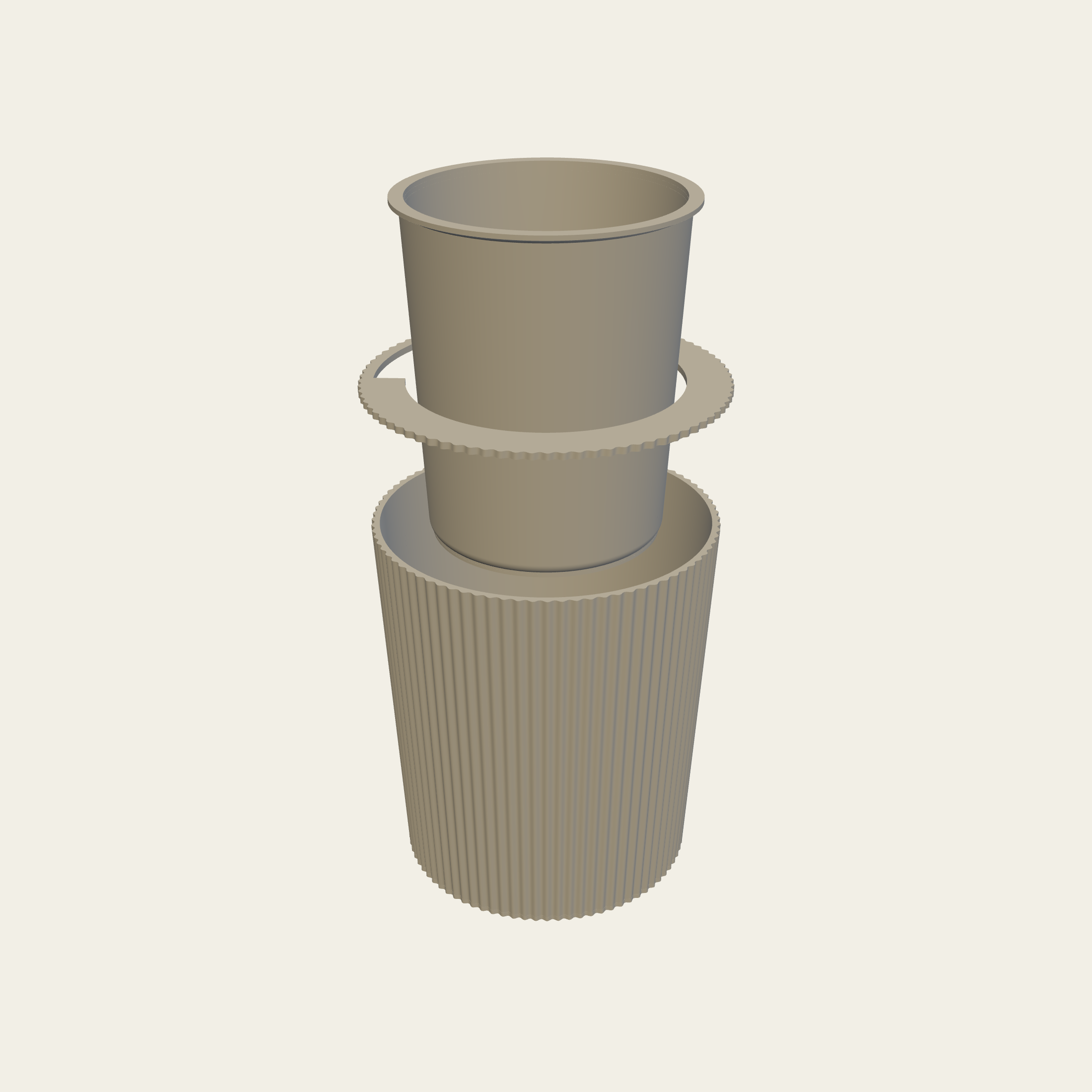
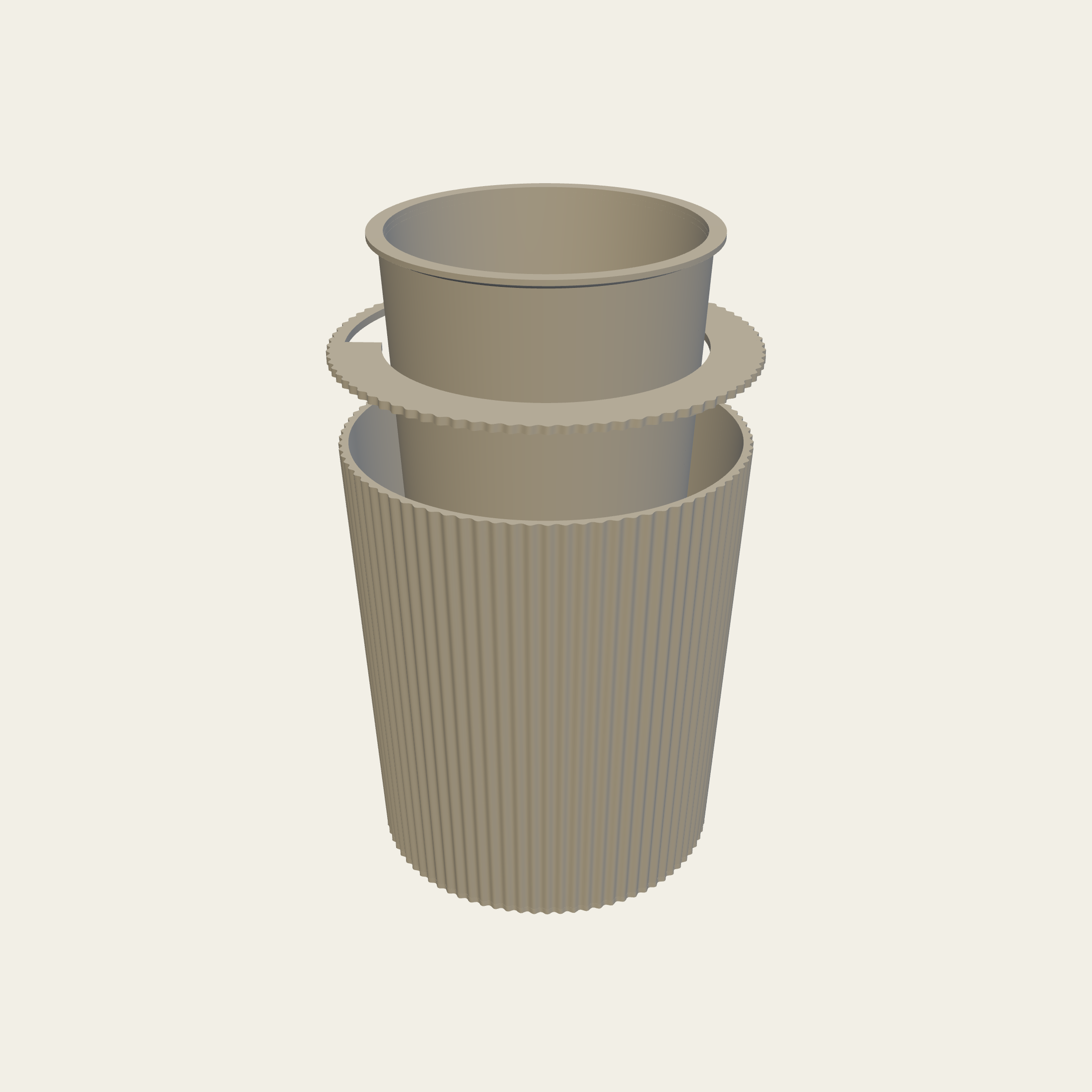
Ours come apart into three. The liner is the pot the plant is actually in. The seat ring holds it. The shell is the decorative part, and it is the only one that changes between designs.
That split is not a manufacturing convenience. It is why we can draw a new shell on a Tuesday and have it sit on a liner that has already been through a hundred plants.
The liner, which is the part that keeps a plant alive
The liner holds the medium, the roots and the water. Its floor, its drainage, the draft on its wall and the fill line inside it are the same whatever the outside is doing. Once a liner is right at a given size, it stops changing.
The practical effect for somebody who owns one: you can buy a different shell next year and keep the liner the plant has already rooted into. Redecorating stops being a repotting job.
It also means the numbers on a size sheet are real. The growing chamber on every product here is measured to the fill line rather than to the rim, which is why it never agrees with the outer dimensions and why it is the number worth reading.
The seat ring, which is the whole trick
Between the liner and the shell there is a ring. Its inside is bored to the liner. Its outside is drawn to the shell. It is an adaptor, and it is the smallest, fastest part in the whole assembly.
A new shell costs a new ring and not a new liner. That single sentence is the concept.
It is why a made-to-order range can carry a lot of designs without becoming unreliable. The risky, fussy, horticulturally load-bearing part is printed from a drawing that has not moved in months. The part that is new is the part that only has to look good.
Feet, doing two jobs
Inside a self-watering pot, the feet are what hold the liner clear of the reservoir floor. Lift the assembly apart and the whole arrangement is obvious in one look: the shell, the ring it seats on, the liner, and the gap underneath that the feet create. Take them away and the liner sits in the water, the wick stops being a wick, and the bottom of the root ball is simply submerged.
On a plain pot with a hole, the same feet do something less clever and just as useful: they hold the pot a few millimetres above its own tray, so the drainage hole is never standing in what it drained. A pot that drains into a puddle it is sitting in has not drained.
The legs are loose pieces and the holes in the liner's floor are what they go into. Three to five of them, in one even ring, and with no legs fitted they are simply drainage. That is why the liner does both jobs without being two parts.
Getting water back out, which most pots never do
On a plain pot it is an open floor, a foot that lifts it clear, and a tray that comes off to be emptied. That is the whole specification and it is not a hard one, which makes it strange how many pots are sold without it.
On a self-watering pot it is a plugged drain at the lowest point of the reservoir and a liner that lifts out as one piece. Once a season the plug comes out, the whole vessel goes under a tap, and the salts leave the building. A reservoir you can only fill is a reservoir you are slowly poisoning.
On an orchid pot it is most of the wall. Cattleya and its relatives are potted in coarse bark that has to dry all the way through between waterings, so the opening is not a hole in the bottom, it is a third of the side.
The rest of the Hanging and wall pots
The whole range Pots by design Find it by plant How these are built