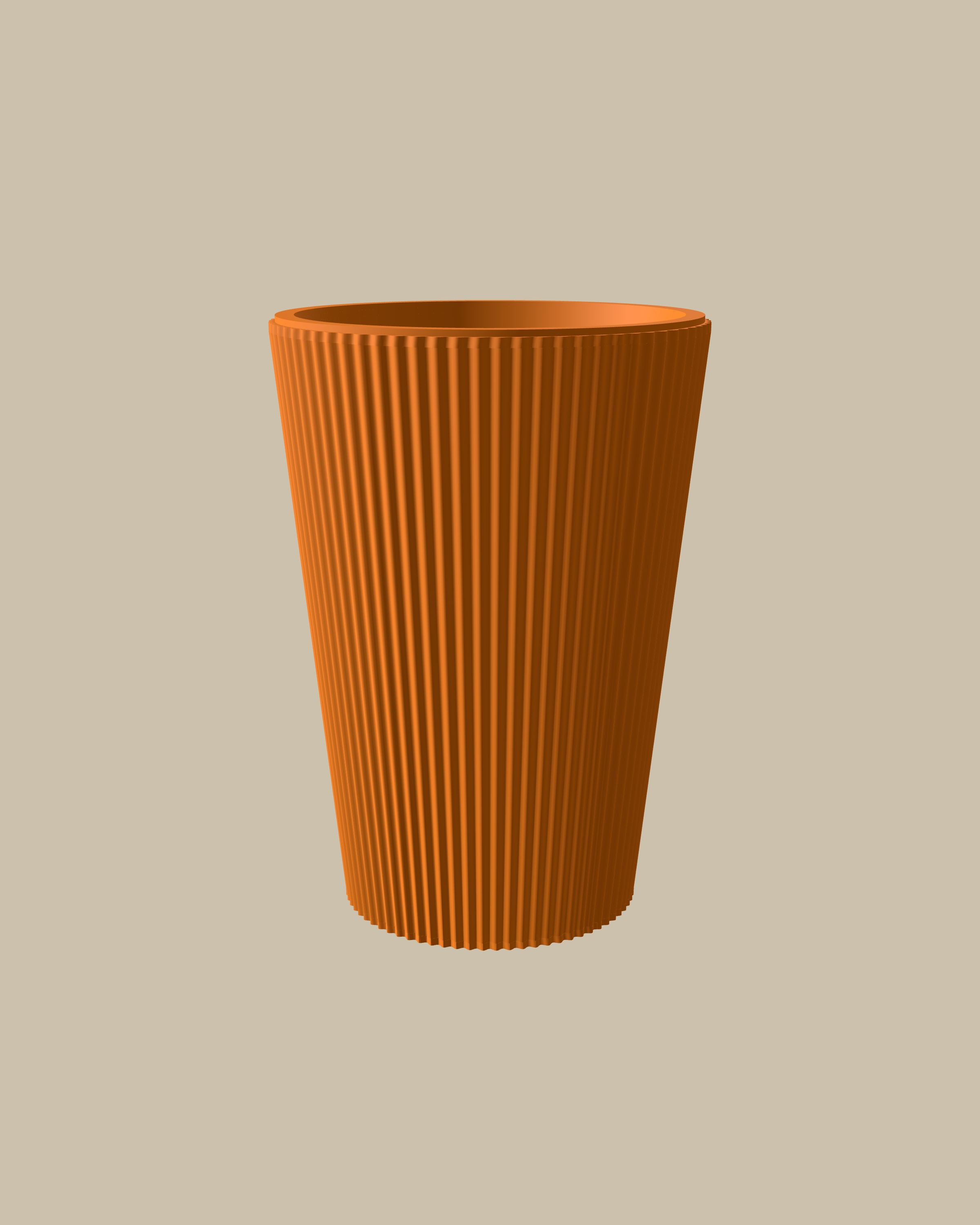
Column Pot 140
The column pot. Depth for thick roots, and enough weight low down that a plant carrying a metre of pole does not walk itself over.
140 mm across, 192 mm tall. Holds 1.75 litres. Rim diameter from 100 to 220 mm.
For plants that mean to stay.
Plants Monstera
Monstera deliciosa, M. adansonii
The pot matters less than what the aerial roots get to hold on to. Both are drawn here, and both come apart to go up.
1 pieces
Every one printed to order in Yerevan at the size you ask for. Tap a code, send a photo of the plant and the pot it is in now, and a size comes back the same day.
The column pot. Depth for thick roots, and enough weight low down that a plant carrying a metre of pole does not walk itself over.
140 mm across, 192 mm tall. Holds 1.75 litres. Rim diameter from 100 to 220 mm.
Start from this drawing and change everything
The editor opens on our shape for a Monstera: the proportion, the drainage and whether there is a reservoir at all are already set the way this page argues for. Then every slider moves. Worth changing for a Monstera:
We make these and they are good pieces. They are not for this plant, and here is the reason in each case.
These are the figures the pieces are drawn to rather than measurements taken off a finished one, and they are a starting point for your plant rather than a rule. Send us what it is in now and we will move them.
A Monstera on a shelf makes small flat leaves. The same plant with its aerial roots into damp moss makes the big fenestrated ones people buy the plant for. The aerial roots are not decoration; they are how the plant feeds a bigger leaf.
Which is why ours stacks. The usual failure of a moss pole is not the moss, it is that the plant outgrows a fixed height and repotting the whole thing onto a taller stake means untying a mature plant and starting again. Ours adds a section at the top, and the spigot geometry is the same on every section ever printed, so a piece bought next year fits the one bought this year.
Orchid bark, perlite and a little coir or compost, roughly in thirds. It should feel like something you could not plant a seed in. Water should run straight through and out the bottom within a few seconds.
That mix is why the reservoir pots on this site are not what we would sell you for a Monstera. Air is the point of the mix, and a wick needs the opposite of air.
Water the pot until it runs out, empty the tray. Then wet the pole. A dry pole is a pole the aerial roots will not enter, and the plant will run them along the floor looking for something better.
In summer that is a soak every week or so and a wetting of the pole between times. In winter, half of that. The plant will tell you: leaves that fold along the midrib are thirsty, leaves that go yellow low down and soft are wet.
One node with one leaf, cut just below the node, into water. Roots in three to five weeks. The node is the part that matters; a leaf without one will live for months in a jar and never root.
Pot up at around 50 mm of root, into the same chunky mix, and give it something to climb from the start. A plant that has never trailed never has to be retrained.