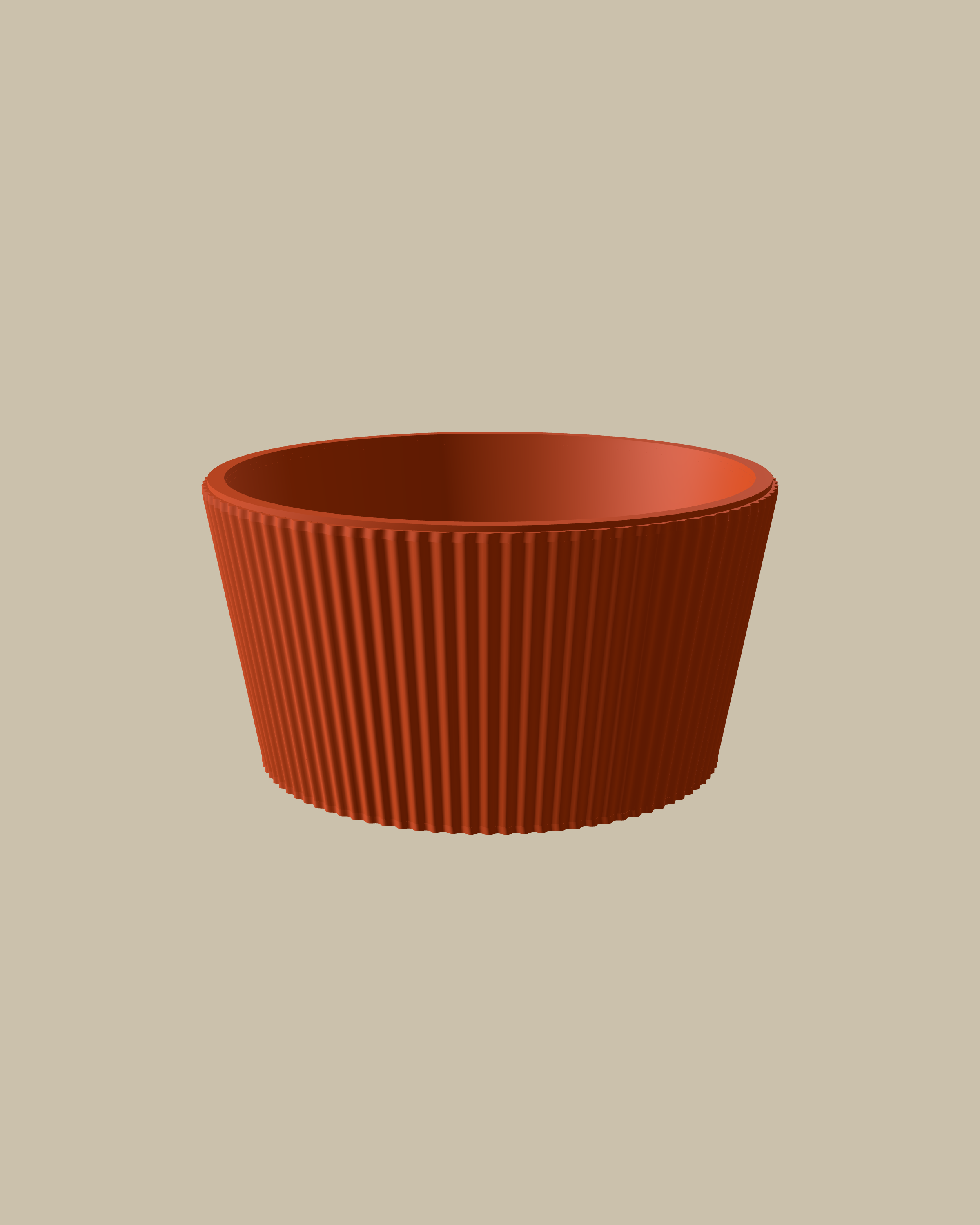
Pan Pot 200
The pan pot, when it does need repotting. Wide and shallow suits a sparse root system, and a Hoya in a shallow pot dries between drinks the way it wants to.
200 mm across, 98 mm tall. Holds 1.75 litres. Rim diameter from 160 to 300 mm.
For plants that mean to stay.
Plants Hoya
Hoya carnosa and relatives
A Hoya flowers when it is comfortable and slightly cramped. Almost everything we would sell you here is a support rather than a bigger pot.
1 pieces
Every one printed to order in Yerevan at the size you ask for. Tap a code, send a photo of the plant and the pot it is in now, and a size comes back the same day.
The pan pot, when it does need repotting. Wide and shallow suits a sparse root system, and a Hoya in a shallow pot dries between drinks the way it wants to.
200 mm across, 98 mm tall. Holds 1.75 litres. Rim diameter from 160 to 300 mm.
Start from this drawing and change everything
The editor opens on our shape for a Hoya: the proportion, the drainage and whether there is a reservoir at all are already set the way this page argues for. Then every slider moves. Worth changing for a Hoya:
We make these and they are good pieces. They are not for this plant, and here is the reason in each case.
These are the figures the pieces are drawn to rather than measurements taken off a finished one, and they are a starting point for your plant rather than a rule. Send us what it is in now and we will move them.
This is the single most useful thing anybody can tell a new Hoya owner. The flowers come off a short woody spur, and the same spur flowers again, year after year. Tidy it away after the blooms drop and you have removed next summer's flowers.
So the support matters more than it looks. A plant trained round a hoop keeps its spurs accessible and undisturbed, where a plant that is untangled and re-wound every few months loses them to tidying.
Open and coarse: orchid bark, perlite, a little coir, some growers add charcoal. If you would be happy putting a Phalaenopsis in it, a Hoya will be happy in it too.
The leaves are the reservoir. That is the whole trick of the plant, and it means the pot can be small and the mix can be lean without the plant minding.
A Hoya that is repotted generously stops flowering and puts everything into vine. Kept in the pot it has, with roots filling it, it flowers. We are not going to sell you a bigger pot for a plant that will punish you for it.
The one exception is a pot that has gone sour: mix that has broken down to a fine wet paste, no bark structure left, water sitting on the top. That gets repotted whatever the plant is doing, into the same size pot with fresh coarse mix.
Soak through, drain completely, let it get properly dry, then soak again. Wrinkled leaves say water; soft or blackened stems at the base say you already did.
Flowering wants brightness: the sunniest window in the flat short of scorching afternoon glass. A Hoya in a dim corner is a healthy plant that never blooms, which is the commonest complaint we hear about them.